

What Is Digital Marketing for Service-Based Businesses?
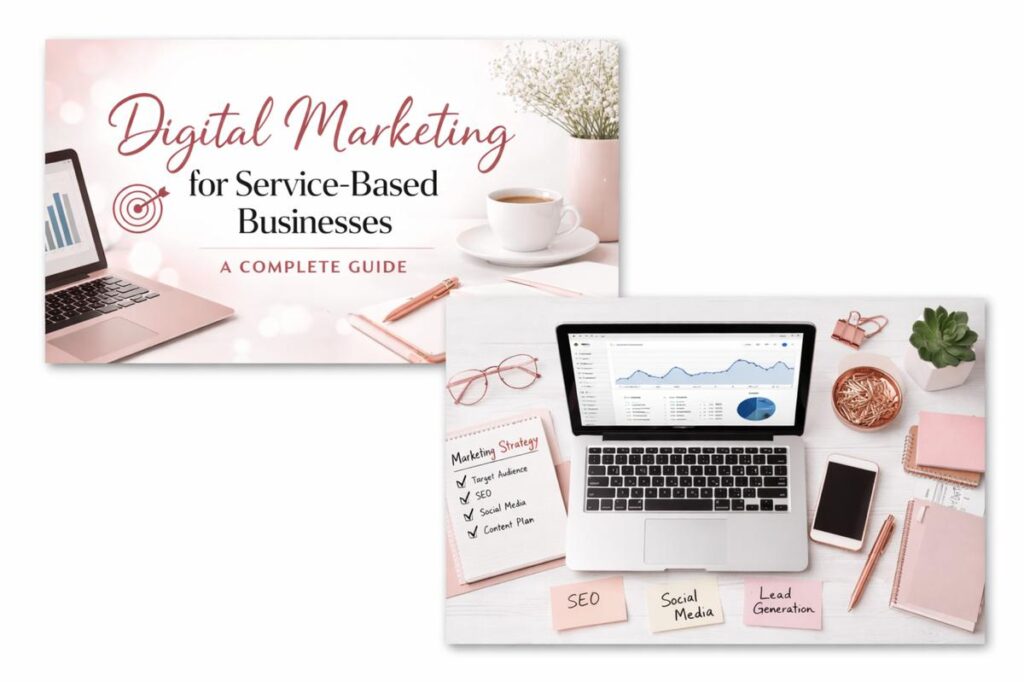
Digital marketing for service-based businesses is not just about posting on social media or running advertisements. It is about strategically positioning your business online so that potential clients understand who you are, what you offer, and why they should trust you.
Unlike product-based businesses, service providers are selling expertise, experience, and results. This means your digital presence must build credibility before a client ever contacts you.
For service-based businesses such as real estate agencies, hospitality brands, consultants, start-ups, and local professionals, digital marketing is the bridge between visibility and trust.
It includes:
- Website design and optimisation
- Search engine optimisation (SEO)
- Content marketing
- Social media management
- Brand positioning
- Performance tracking and analytics
When done correctly, digital marketing creates a consistent and strategic presence that turns visitors into enquiries.
Why Service-Based Businesses Need a Strategic Online Presence
Many service-based businesses rely heavily on referrals and word-of-mouth marketing. While referrals are valuable, they are no longer enough in a digital-first world.
Before making contact, most clients will:
- Search your business on Google
- Visit your website
- Check your social media presence
- Read reviews
- Compare you to competitors
If your digital presence is outdated, inconsistent, or unclear, potential clients may move on — even if you offer excellent services.
A strategic online presence ensures:
- Clear communication of your services
- Professional and cohesive branding
- Trust-building through content
- Visibility in search results
- A seamless user experience
Digital marketing for service-based businesses is about presenting your business with clarity, confidence, and credibility.
Website Design as the Foundation of Digital Marketing
Your website is the central hub of your digital marketing strategy. It is the space you fully own and control.

Why a Professional Website Matters
A professionally designed website:
- Builds immediate trust
- Communicates your expertise
- Guides users toward taking action
- Reflects the quality of your services
For service-based businesses, your website should clearly explain:
- Who you help
- What problems you solve
- How your process works
- How to contact you
An effective website is not just visually appealing. It is structured, mobile-friendly, fast-loading, and SEO-ready.
Key Elements of a High-Converting Service Website
To support digital marketing efforts, your website should include:
- Clear service descriptions
- Structured H tags for SEO
- Strategic calls-to-action
- Contact forms
- Trust signals such as testimonials
- Optimised images and performance
Without a strong website, other marketing efforts become less effective.
The Role of SEO in Service-Based Marketing
Search engine optimisation (SEO) helps your business appear in search results when potential clients are actively looking for your services.
For example, a hospitality brand may want to rank for:
“Luxury boutique marketing services”
A real estate business may want visibility for:
“Property marketing strategy”
On-Page SEO
On-page SEO includes:
- Proper use of H1, H2, and H3 tags
- Optimised meta titles and descriptions
- Keyword placement within content
- Image alt text
- Internal linking
Structured content helps search engines understand your page and improves your chances of ranking.
Local SEO for Service Providers
For businesses serving a specific region, local SEO is essential.
This includes:
- Google Business Profile optimisation
- Location-based keywords
- Local content
- Directory listings
Digital marketing for service-based businesses must include local visibility where relevant.
Social Media as a Brand Positioning Tool
Social media is often misunderstood as simply posting content regularly. In reality, it should support your broader marketing strategy.
For service-based businesses, social media helps:
- Showcase expertise
- Share behind-the-scenes insights
- Build authority
- Create trust
- Engage with potential clients
However, without structure and consistency, social media can become time-consuming without delivering results.
A strategic content plan ensures your messaging aligns with your brand positioning and long-term goals.
Visual Content and Brand Presentation
In service industries, presentation influences perception.
Clients often associate the quality of your branding with the quality of your services.
Professional visual content includes:
- Brand identity design
- Website visuals
- Social media graphics
- Photography and video
- Consistent typography and colour palettes
For hospitality, property, and lifestyle brands especially, high-quality visuals are essential in communicating atmosphere and professionalism.
A cohesive visual identity supports digital marketing by reinforcing brand recognition and credibility.
Performance Tracking and Data-Driven Decisions
Digital marketing should not rely on guesswork.
Analytics and performance tracking allow service-based businesses to:
- Understand website traffic sources
- Monitor user behaviour
- Measure campaign success
- Improve conversion rates
- Refine messaging
Tools such as Google Analytics, search console insights, and performance reports provide valuable data that inform future marketing decisions.
A refined marketing strategy combines creativity with measurable results.
Common Mistakes in Digital Marketing for Service-Based Businesses
Many businesses invest in marketing without a clear strategy.
Common mistakes include:
- Relying only on social media
- Ignoring SEO
- Having no clear brand positioning
- Inconsistent messaging
- Outdated websites
- Lack of calls-to-action
Digital marketing is most effective when it is structured and aligned with long-term goals.
Building a Sustainable Digital Marketing Strategy
A sustainable strategy focuses on:
- Clear brand positioning
- A strong website foundation
- SEO visibility
- Consistent content creation
- Data-driven optimisation
Instead of chasing trends, service-based businesses benefit from investing in long-term visibility and credibility.
Digital marketing is not about quick wins. It is about building a trusted online presence that grows with your business.
Final Thoughts on Digital Marketing for Service-Based Businesses
In today’s competitive landscape, digital marketing is no longer optional for service-based businesses.
It is the framework that supports visibility, credibility, and growth.
By combining:
- Strategic website design
- Search engine optimisation
- Structured social media management
- Cohesive visual branding
- Performance analytics
Businesses can position themselves as professional, trustworthy, and distinctive in their industries.
A refined and intentional digital presence ensures that when potential clients discover your business, they immediately understand your value.

How Digital Marketing Creates Long-Term Business Growth for Service Providers
Digital marketing for service-based businesses is not only about generating immediate enquiries. It is about building sustainable growth over time.
Unlike short-term advertising campaigns, a strategic digital marketing approach compounds. The content you publish today, the website structure you optimise, and the search engine visibility you build can continue generating leads months or even years later.
Building Authority Over Time
Service-based businesses rely heavily on trust. Clients are investing in your expertise, not a physical product. Digital marketing supports long-term growth by positioning your business as a knowledgeable and reliable authority within your niche.
This happens through:
Educational blog content
Case studies and project showcases
Industry insights
Client testimonials
Search-optimised service pages
When potential clients repeatedly encounter your brand in search results, on social media, or through shared content, familiarity increases. Familiarity builds trust. Trust drives conversions.
Creating Predictable Lead Generation
One of the most powerful outcomes of a structured digital marketing strategy is predictability.
Instead of relying solely on referrals or seasonal demand, businesses with strong digital foundations benefit from:
Organic search traffic
Consistent website enquiries
Improved conversion rates
Retargeting opportunities
Email list growth
SEO-driven content, combined with clear calls-to-action, ensures that your website functions as an active lead generation tool rather than a static online brochure.
Over time, this reduces uncertainty and allows for more stable business planning and scaling.
Aligning Marketing With Business Goals
Digital marketing should support measurable business objectives. For service-based businesses, this may include:
Increasing consultation bookings
Generating property listing enquiries
Securing hospitality brand partnerships
Expanding into new regions
Strengthening premium brand positioning
By tracking performance data and refining strategy accordingly, marketing becomes aligned with growth targets rather than operating independently from them.
This alignment ensures that every piece of content, every website improvement, and every SEO optimisation supports a broader strategic vision.
The Competitive Advantage of Professional Presentation
In competitive industries such as real estate, hospitality, consulting, and digital services, presentation can significantly influence perception.
Businesses that invest in structured digital marketing stand out through:
Professional website design
Clear messaging
Strategic brand positioning
Optimised search visibility
Cohesive visual identity
When two businesses offer similar services, the one with the stronger digital presence often appears more established, credible, and trustworthy.
Digital marketing, therefore, becomes a competitive advantage — not just a promotional tool.
Evolving With the Digital Landscape
The digital landscape continues to evolve. Search engine algorithms change, social platforms shift, and consumer expectations increase.
Service-based businesses that prioritise digital marketing are better positioned to adapt to these changes.
By monitoring analytics, reviewing performance metrics, and staying informed about industry developments, businesses can adjust strategies proactively rather than reactively.
This adaptability ensures long-term resilience in an increasingly competitive marketplace.
Ready to strengthen your digital presence?